Types of Window Frames
A closer look at window frame materials and how they perform
Why it matters
The frame is a big part of every window. It affects how much heat escapes in winter, how much comes in over summer, how quiet a room feels and how long the window lasts. It also counts toward compliance. When an energy assessor checks a window, they rate the glass and frame together.
This guide compares six common frame materials, with figures from the Australian Government's Your Home glazing guide.
The six common frame types
- Timber
- Aluminium, standard or thermally broken
- uPVC (unplasticised polyvinyl chloride)
- Steel
- Composite
- Fibreglass
Timber frames
Timber is a good natural insulator and suits many traditional and contemporary designs. Choose a naturally durable species, or one treated against decay, from a sustainably managed forest. Timber swells and shrinks with humidity, so openings need larger tolerances. Good draught seals stop those gaps from leaking air. Timber needs more maintenance than most other materials.
Aluminium frames
Aluminium is light, strong and durable, with a wide range of powder-coated and anodised finishes. It gives the slim look many architects like. The trade-off is heat. Aluminium conducts heat very well, so a standard frame lowers the insulating value of the whole window.
Thermally broken aluminium fixes much of this. The frame is made of two aluminium sections joined by a low-conductivity polymer. That break slows heat moving through the frame. Your Home describes thermally broken frames as among the highest performing available and suited to almost any climate.
Catch up quick: what is a thermal break? This short clip from Oknalux Windows explains it simply.
uPVC frames
uPVC is a rigid plastic. Your Home says uPVC frames provide excellent thermal performance, often better than timber or thermally broken aluminium. They last well, need very little maintenance and seal tightly. They also resist moisture and corrosion, which helps near the coast. Some people prefer the look of timber or metal.
Steel frames
Steel is very strong and allows slim sightlines. It is often chosen where a high fire rating is needed. Like aluminium, steel conducts heat well, so look for frames designed for double glazing with a thermal break. Steel needs galvanising or a protective finish to prevent corrosion.
Composite frames
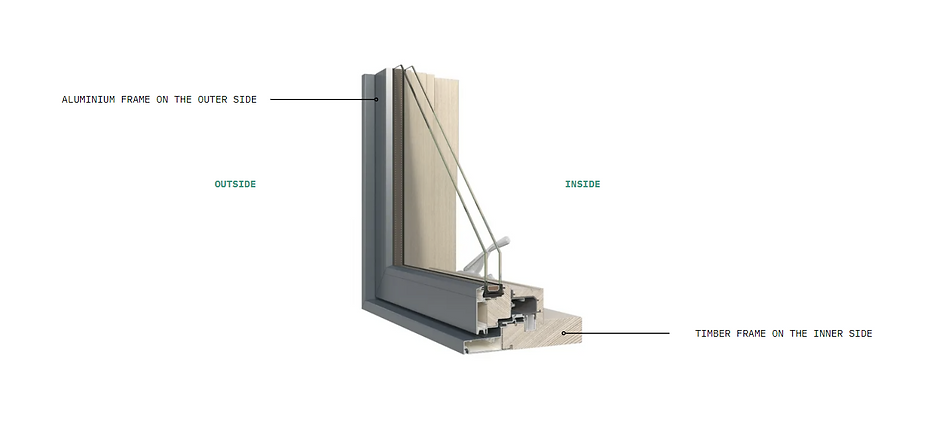
Composite frames pair an aluminium outer section with a timber or uPVC inner section. You get the low maintenance of aluminium outside and much better thermal performance inside. Cost is the main limit, and it varies a lot between suppliers.
Here is an example of a composite product from window manufacturer Miglas.
Fibreglass frames
Fibreglass frames are glass fibres set in resin. They are strong, stable and insulate well. Your Home notes that fibreglass is currently of limited availability in Australia, so check lead times and local support before you specify it.
How the frames compare
The table below shows typical whole-window values from Your Home, which sources them from the Window Energy Rating Scheme (WERS). Uw is the heat conduction of the whole window, glass and frame together. Lower is better.
| Window | Glazing | Uw (W/m²K) |
|---|---|---|
| Aluminium frame | Single, 3 mm clear | 6.9 |
| Timber or uPVC frame | Single, 3 mm clear | 5.5 |
| Aluminium frame | Double, 3 mm clear / 6 mm air / 3 mm clear | 4.2 |
| Timber or uPVC frame | Double, 3 mm clear / 6 mm air / 3 mm clear | 3.0 |
| Timber and aluminium composite | Triple, low-e, argon-filled | 1.0 |
Source: Your Home glazing guide, table of typical window values, from WERS. Values are typical, not product ratings. Checked on 5 November 2026.
Two things stand out. First, a better frame on the same glass makes a clear difference, from 4.2 to 3.0 for double glazing. Second, the glass and frame work as a pair. A great frame cannot rescue poor glass, and the reverse is also true.
| Frame | Thermal performance | Maintenance | Worth knowing |
|---|---|---|---|
| Timber | Good | Higher | Needs durable or treated species and good seals |
| Standard aluminium | Poor | Low | Slim and strong, but conducts heat well |
| Thermally broken aluminium | Very good | Low | Among the highest performing frames |
| uPVC | Excellent | Very low | Often better than timber or thermally broken aluminium |
| Steel | Poor, unless thermally broken | Medium | Often used where fire ratings are high |
| Composite | Very good | Low | Aluminium outside, timber or uPVC inside |
| Fibreglass | Good | Low | Limited availability in Australia |
Ratings summarise the descriptions in the Your Home glazing guide. They are a guide, not a product test.
Frames and the NCC
For Class 3 and Class 5 to 9 buildings following the Deemed-to-Satisfy route, NCC 2025 J4D6 caps the Total System U-Value of glazing at U5.8. The wall and glazing together must also meet the limits in Table J4D6a. Going by the typical values above, single-glazed standard aluminium (6.9) would not meet the U5.8 cap. A thermally broken or timber frame with double glazing gives far more room to move.
Choosing well
Upfront cost and looks often lead the decision. Energy, comfort and durability deserve the same weight, because you live with them for decades.
Yes, but: some argue that frames get too much attention, and that glass, shading and orientation matter more. There is truth in that. A whole-building view is the right one. Within that view, though, the frame is a cheap place to gain performance at design stage and an expensive one to fix later.
Our view is simple. For comfort and energy, uPVC, thermally broken aluminium, composite and well-sealed timber are all strong choices. Pick the one that suits your climate, budget, look and maintenance plans, then pair it with the right glass.
Frequently asked questions
Which window frame is the most energy efficient?
Your Home says uPVC often performs better than timber or thermally broken aluminium. Composite frames also perform very well. The best result comes from pairing a good frame with good glass.
Is aluminium bad for energy efficiency?
Standard aluminium conducts heat well, so it lowers a window's insulating value. Thermally broken aluminium solves much of this and is among the highest performing frames.
What does Uw mean?
Uw is the heat conduction of the whole window, glass and frame together. A lower number means less heat lost or gained.
Do window frames affect NCC compliance?
Yes. The NCC rates glazing as a whole system, including the frame. A poor frame can push a window or façade over the limit.
A quiet word before you go
If you are weighing frame options for a commercial or multi-residential project, we can check how each choice affects Section J compliance before you commit. Read about our Section J reports, or send us your window schedule and we will take a look.
Questions or corrections: contact Makao.